Atelier · Storage
Fur coat storage in Brussels
Your coat spends the winter with you. In summer, it comes to us. On the chaussée de Charleroi, the house of New Embert keeps its clients' furs in its own cold room, away from the heat and damp that dry out the leather. Throughout the storage period, the garment never leaves the house.

Why fur suffers in summer
A fur is a skin. Heat gradually dries out the leather, which loses its suppleness, becomes brittle and eventually tears. Light makes the colours fade. Damp encourages mould. During the warm months, a wardrobe or a sunny room often combines these risks.
Damp is the most insidious: a smell of cellar or mould points to leather attacked from within, and a piece that is still sound today may no longer be so a few years later.
Cold room
In the house's cold room
Furs are kept at New Embert, in a cold room on the house's premises on the chaussée de Charleroi. Conditions in the cold room are monitored and managed according to the atelier's know-how. Garments are arranged there in alphabetical order and by length.
Storage approached with the vigilance reserved for valuable pieces: garments remain on New Embert's premises throughout their storage and never leave the house.
On arrival, then during storage
Each fur is inspected a first time on arrival, then examined again at the atelier. During storage, a specific product against moths is applied approximately every 150 days.
Clothes moths go first for pieces that have been worn and then put away without care, and cold greatly slows their larvae. No one can promise that a moth will never appear; the atelier, for its part, regularly checks and treats the pieces entrusted to it.
When to bring it in, when to collect it
Most clients bring in their fur in April or May, as the first fine days arrive, and collect it around November. This calendar is not an obligation: the house can also keep it for longer, up to a year, depending on the client's needs. It then serves as a cloakroom for your furs.
To place a fur in storage, visit the shop, write to us or give us a call.
Any provenance
Which furs are accepted?
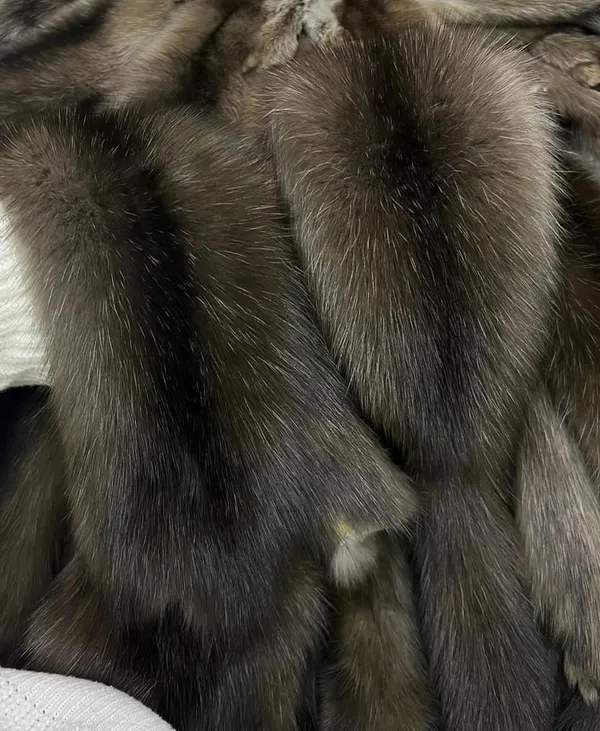
Mink, fox, astrakhan, chinchilla, sable, shearling: New Embert accepts all kinds of fur and sheepskin, from the long coat to the jacket, as well as collars, stoles, hats and scarves. It does not matter where the garment was bought: storage is open to pieces from other houses.
Genuine heritage pieces pass through the atelier: among them, a coat dating from 1925.
Cleaning and storage
Cleaning and storage are normally two separate services. In April and May, however, New Embert offers a package combining cleaning and storage. Putting away a clean piece makes sense: moths go first for soiled textiles. Cleaning can also be done at any other time of year; the method is explained on the Cleaning page.
At home
Storing a fur at home
If you keep your fur at home, a few simple habits protect it:
- Hang it on a wide hanger.
- Keep it somewhere dark, away from the light.
- Keep it away from sources of heat.
- Do not compress the garment.
- Avoid a closed plastic cover.
How much does fur storage cost?
The price depends on the piece: a coat or a jacket does not take up the same space as a collar or a stole. It is given to you on request, before you bring it in, as is the price of the spring cleaning and storage package.
Belgium and abroad
Not based in Brussels?
New Embert's clientele is not limited to Brussels: the house works with clients living up to around 500 km from the city. A fur can be entrusted to it for storage alone; sending and return can be arranged with you, depending on your situation, and the arrangements are agreed before anything is sent.
- Get in touch: by email, by phone or through the form.
- Prior agreement: we agree together on the storage period and how the garment will be sent and returned.
- Sending the garment to 35 chaussée de Charleroi, 1060 Brussels, once agreed.
- Inspection on arrival, then examination at the atelier.
- Storage in the house's cold room.
- Return of the garment as agreed.
Frequently asked questions
Where is my fur stored?
At New Embert, in Brussels, in a cold room on the house's premises. The garment does not leave the house during storage.
When should I bring in my fur, and when can I collect it?
Most often in April or May, to collect it around November. This is not an obligation: the house can also keep it for longer, up to a year.
What does New Embert do about moths?
Each piece is inspected on arrival, then examined at the atelier; during storage, a specific product is applied approximately every 150 days.
Does my fur have to have been bought from New Embert?
No. Where it was bought makes no difference: storage is open to furs and sheepskins from other houses.
Is cleaning included in storage?
Normally, these are two separate services. In April and May, New Embert offers a package combining cleaning and storage.
Can I send my fur from another city?
Yes. New Embert works with clients up to around 500 km from Brussels; sending and return can be arranged with you, depending on your situation.
How should I store a fur at home?
On a wide hanger, somewhere dark, away from sources of heat, without compressing the garment, and without a closed plastic cover.
How much does it cost to store a fur?
The price depends on the piece (coat, jacket, collar, stole…). New Embert gives it to you on request, before you bring it in.
Contact
Entrust your fur to us
To place a fur in storage, visit the shop at 35 chaussée de Charleroi in Saint-Gilles, write to us or give us a call.
Write to the atelier