Atelier · Cleaning
Fur coat cleaning and care in Brussels
A fur is not washed like a woollen coat. At the New Embert atelier, on the chaussée de Charleroi, it is first examined, then worked in a drum with sawdust and oil. Then, depending on what it needs, come extraction, blowing, combing, steam and lustring. Cleaning does not change the garment itself, but it changes how it looks and how it smells. And when the condition of the leather makes the work too risky, the atelier would rather tell you so.
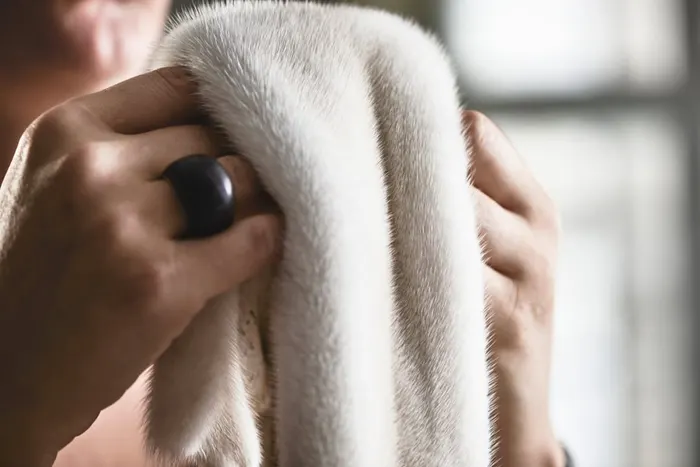
The atelier
How does cleaning work at New Embert?
Cleaning a fur is not a single, fixed programme. Each piece goes through the steps it needs, according to the type of fur and its condition.
-
Examining the garment
Before any cleaning, the atelier examines the piece: the leather, the general condition of the garment, the lining, any odours and how the colour has changed. The type and condition of the fur determine what can reasonably be done. This is when the atelier tells you what cleaning can achieve, what it will not be able to correct and, where relevant, whether it would be wiser not to go ahead.
-
The drum
The fur is placed in a drum with sawdust and oil. As the drum turns, the sawdust works its way through the hair, where it absorbs the dirt.
-
Extraction and blowing
The sawdust is then removed from the hair by extraction and, if necessary, by blowing.
-
Combing, steam and lustring
Depending on the fur, the hair is then combed, steamed and lustred by hand, in the direction of the hair. Lustring restores its sheen and the way it falls.
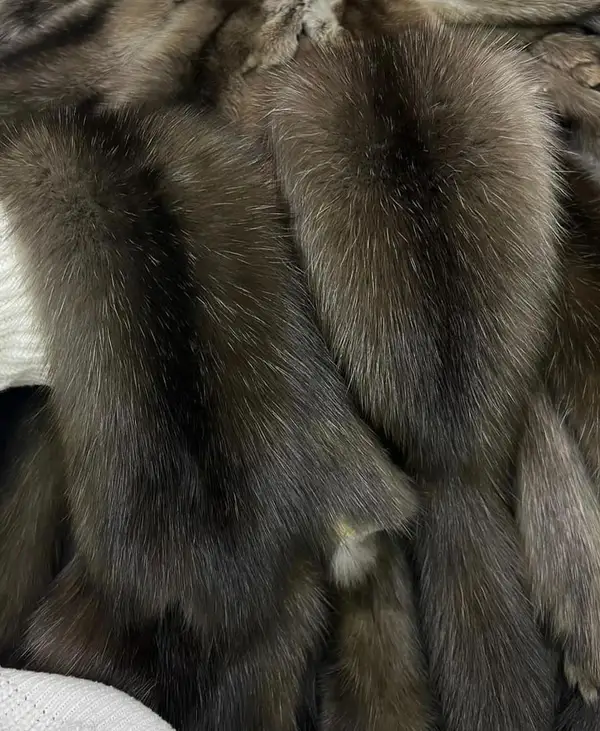
What is included
What cleaning includes, and what it does not
The lining is not cleaned automatically
Many clients are not aware of this: cleaning concerns the fur, not the lining. If the lining needs attention, there are two options. It is removed, cleaned separately and put back. Or it is replaced. Either way, this is substantial handwork, on top of the care of the fur itself, and so it is not priced the same.
Cleaning, repair or restyling?
A fur that smells musty, of mothballs or of damp
Cleaning generally reduces odours considerably, especially those the garment has built up over time, and often makes them disappear. The result does, however, depend on where the odour comes from, how long it has been there and the condition of the garment: the atelier cannot promise in advance that it will go completely.
A smell of mothballs or naphthalene says nothing about the condition of the garment: if anything, it shows that someone took care of it. A smell of damp, of a cellar or of mould is more serious, because damp attacks the leather from the inside. Take the fur out of its cover, let it breathe in a dry room, out of the sun, and have it examined without delay.
Yellowed fur, or fur whose colour has changed
It is possible to try to improve the look of a fur that has yellowed or whose colour has shifted. But when the colour has been permanently altered, set by time, light or perfume, the result becomes far less certain, and correction is sometimes impossible. The atelier tells you so before starting, rather than promise a result it could not deliver.
Advice
When the atelier advises against cleaning
An old fur, leather that has dried out or a weakened garment cannot always withstand treatment. When the condition of the leather or the garment makes it too risky, New Embert may decline the cleaning. It is a way of working: better to advise against a job than to accept it at the risk of damaging the piece, or of disappointing you.
To get a first idea, fold a discreet part of the garment between your fingers, for example at the bottom of the back. A faint crackling sound points to leather that has dried out: mention it when you get in touch.
Sheepskin and shearling
Sheepskin and shearling do not go in the drum. New Embert treats them with a pad, which is different work from cleaning a fur.
Can a fur coat be dry cleaned?
Many people first think of the dry cleaner's. In everyday language, dry cleaning means cleaning in a machine with a solvent, most often perchloroethylene. That is not New Embert's method: the atelier works in a drum with sawdust and oil, then adapts the finishing to each fur.
The difference also lies in the examination. A furrier looks at the leather and the garment before doing anything, and can tell you whether cleaning makes sense, what it will achieve and what it will not correct. If you do take a fur to a dry cleaner, ask how it will be treated.
How often should a fur coat be cleaned?
New Embert recommends cleaning every two to three years. This is a guide, to be adjusted to how often you wear the fur and to its condition.
Cleaning and storage
A fur can be cleaned at any time of year: cleaning is not tied to summer storage. New Embert sometimes offers it together with storage, which is presented separately.
At home
What to do at home
If your fur gets wet
- Let it dry naturally.
- Keep it away from any direct source of heat, such as a radiator or a hair dryer.
- Do not touch the hair while it is still damp.
- If in doubt, or if it still looks wrong once dry, contact New Embert: restoring the hair is work for the atelier.
Home remedies and old wives' tricks
Some traditional remedies have their uses, but no home treatment is without risk for a fur. Before applying any product to a valuable piece, bicarbonate of soda included, ask the atelier for advice.
How much does it cost to clean a fur coat?
The price of cleaning depends on the piece: a coat, a jacket, a cape, a collar, a stole or a throw do not take the same work. It is given to you on request, before any work is done. Treating the lining, when needed, comes on top.
Belgium and abroad
Not based in Brussels?
The atelier works for clients across Belgium and abroad: Luxembourg, France, the Netherlands, Germany… A fur can be sent to New Embert for cleaning alone. The first exchange takes place entirely remotely. The condition of the leather, however, can only really be judged at the atelier.
- Get in touch: by email, by phone or through the form.
- Photos and information: the garment from the front and the back, the inside opened to show the lining, the label, and what you have noticed (odour, colour, dull hair, crackling leather).
- Prior agreement: we agree together on the next steps and how the garment will be sent.
- Sending the garment to the atelier, 35 chaussée de Charleroi, 1060 Brussels, once agreed.
- Examination at the atelier: if cleaning is not advisable, we tell you before any work is done.
- Cleaning, then return of the garment as agreed.
Frequently asked questions
How much does it cost to clean a fur coat?
The price depends on the type of piece: a coat, a jacket, a cape or a collar do not take the same work. New Embert gives it to you on request, before any work is done. If the lining needs cleaning or replacing, that work is added to the price.
Can fur coats be dry cleaned?
Dry cleaning, in the usual sense, is done in a machine with a solvent, most often perchloroethylene. That is not New Embert's method: the fur is worked in a drum with sawdust and oil, after the leather and the garment have been examined.
Can a fur coat go in the washing machine?
No. A fur is not washed like a woollen coat. At New Embert, it is cleaned in a drum with sawdust and oil.
Will cleaning remove a musty, mouldy or mothball smell?
Cleaning generally reduces odours considerably, and often makes them disappear. The result depends on where the odour comes from, how long it has been there and the condition of the garment: complete removal cannot be promised in advance. A mouldy smell should be taken seriously, because damp attacks the leather.
Is the lining cleaned at the same time as the fur?
No, not automatically. To treat it, it has to be removed, cleaned separately and put back, or replaced. This is additional handwork, with its own price.
Can yellowed fur get its colour back?
It is possible to try to improve its look. But if the colour has been permanently altered by time, light or perfume, the result is far less certain, and sometimes impossible. The atelier tells you so before starting.
How often does a fur need cleaning?
New Embert recommends cleaning every two to three years, adjusted to how often the garment is worn and to its condition. Cleaning can be done at any time of year.
What should I do if my fur gets wet?
Let it dry naturally, away from any direct source of heat, and do not touch the hair while it is still damp. If it still looks wrong once dry, or if you are unsure, contact New Embert: restoring the hair is work for the atelier.
Can I clean a fur myself, with bicarbonate of soda for example?
Some traditional remedies have their uses, but no home treatment is without risk for a fur. Before applying any product, bicarbonate of soda included, to a valuable piece, ask the atelier for advice.
How do I get a stain out of a fur?
A stain has to be examined first: only then can anyone say what is possible. Show it to the atelier, or send a photo of it.
Do you clean sheepskin and shearling?
Yes. Sheepskin and shearling do not go in the drum: the atelier treats them with a pad.
Can you refuse to clean a fur?
Yes. When the condition of the leather or the garment makes the work too risky, the atelier would rather advise against it than damage the piece or disappoint you. That is why every fur is examined before it is cleaned.
Contact
Show us your fur
Bring it to the atelier at 35 chaussée de Charleroi in Saint-Gilles, or send us a few photos. We will tell you what cleaning can do for it, and what it will not be able to correct.
Write to the atelier