Atelier · Repairs

Fur coat repair in Brussels

A seam that has given way under the arm. A pocket that tears. Worn cuffs, a split lining, a button torn off. Most furs brought to the atelier do not need a new life: they need to be put right, by someone who first checks whether the pelt allows it. Since 1954, on the chaussée de Charleroi, the house of New Embert has been repairing and altering fur coats. Together with restyling, this is the main work of its atelier.

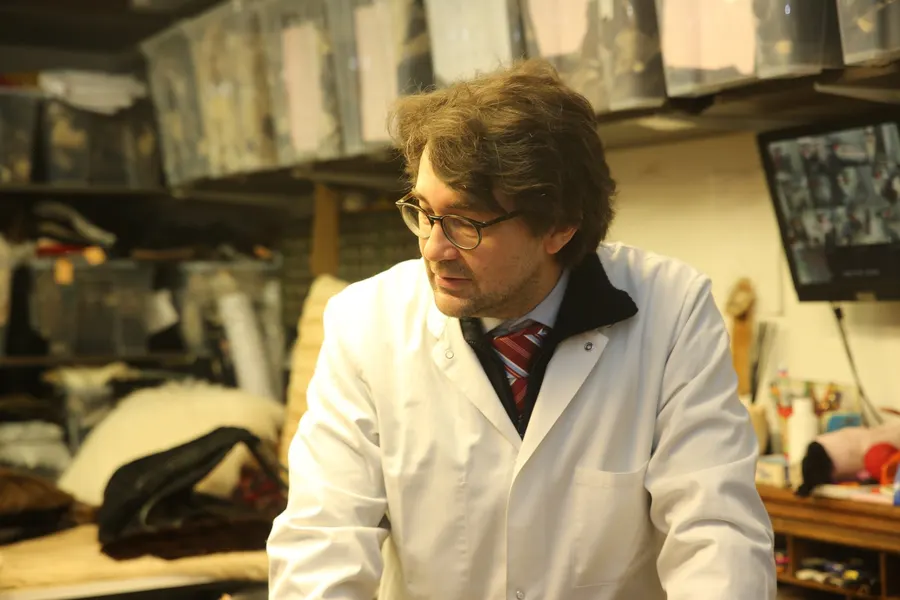
Lionel Fuchs at the workbench of the New Embert atelier, in front of shelves of furs

Repairs

What the atelier repairs

A repair leaves the garment as it is and deals with what has given way. All these interventions depend on the condition of the leather, which is examined before the work is accepted.

Open seams and tears

Over time, seams give way, especially where the garment works hardest: under the arms, at the armholes, across the back. A tear is not simply sewn up. The atelier first examines the leather around the damage. If it is still sound enough, the lining is opened where necessary and the repair is carried out from the reverse side, in the way that suits the tear. If the leather is too dry, brittle or weakened, the atelier warns the client that a lasting repair may be impossible, or that another solution should be considered.

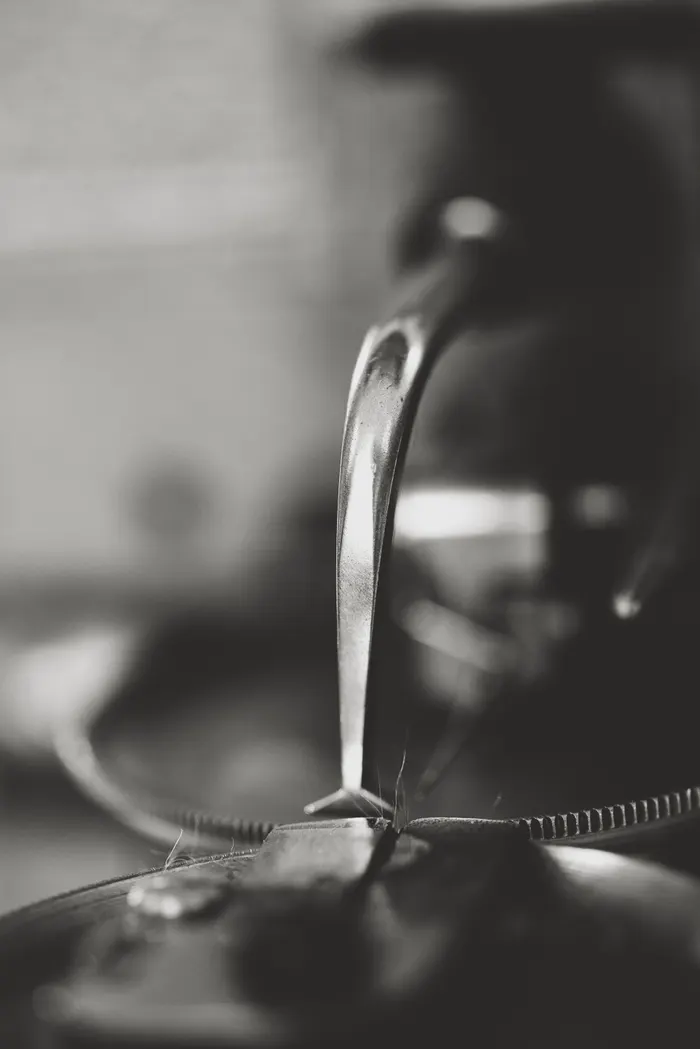
Close-up of a furrier's sewing machine, in black and white

Worn areas: pockets, sleeves, hem, facings, underarms

These are the places that rub every day: the pocket openings, the ends of the sleeves, the hem, the facings (the finishing pieces along the inside edges of the front), the front overlap and the underarms. The hair thins there and the pelt tires. The atelier repairs these areas one by one, or the whole garment when several places have given way.

The lining

A split or tattered lining does not doom a coat. It can be mended when it is simply torn, or replaced without touching the fur, for example with a pure silk or half-silk lining. This is often the simplest way to make a coat wearable again. To sew in a new lining, however, the leather must still be able to hold the seam.

Buttons and fastenings

A button that has come off, a hook that has come loose, a faulty fastening: the atelier repairs or replaces them when it is technically possible.

Replacing a damaged pelt

When a pelt is too damaged to be repaired, it can be replaced, provided the atelier has a compatible pelt or a technically and aesthetically acceptable solution can be found. An identical pelt is not always available: the atelier tells you what is possible before it starts.

Alterations

Alterations

An alteration adapts the garment or the way it falls, without changing its design: shortening the hem or the sleeves, adjusting the shoulders or the sleeve head, taking in the waist, altering the collar, the lapels or the front overlap, remaking the pockets. These alterations affect the cut: they require leather that has stayed properly supple. When they change the length, the sleeves, the ease or the fall of the garment, a fitting may be needed.

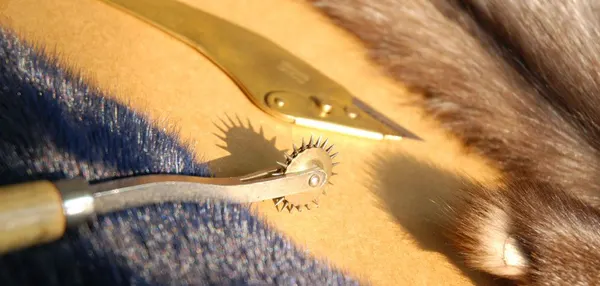
Tracing wheel and furrier's knife resting on the leather side of a pelt

The leather

Why the atelier examines the leather first

A fur is hair carried by a pelt. It is this pelt, the leather, that holds the seams. As long as it stays supple, it can be resewn, repaired and altered. When it dries out, it becomes brittle and splits along the seams. That is why the condition of the leather decides everything, before the look of the hair.

The first gesture is simple: fold a section of the garment between your fingers and listen. If it folds like fabric, or resists a little without a sound, the leather is in good condition. A faint crackle, like paper, signals leather that is starting to dry out. If it crackles clearly, or the pelt splits, the leather is too fragile for a standard repair.

The atelier also looks at the hair (running a hand over it, do hairs stay in the palm?), bare areas, the state of the seams and the lining, and the smell of the inside: a smell of damp or mould signals leather attacked from within. The lining itself can be replaced: it should never be a reason to give up on a repair.

Leather usually dries out because the coat has spent years somewhere too warm and too dry, near a radiator, or on the contrary in the damp of a cellar.
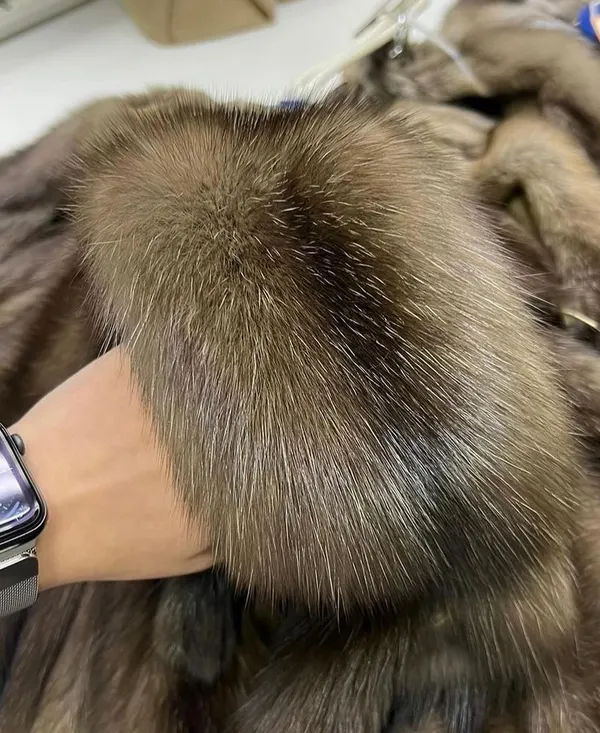
A hand running through the hair of a fur coat to judge its density

Advice

When a furrier should advise against a repair

A good furrier sometimes has to say no. On leather that has become too fragile, adding seams solves nothing: the problem moves, and a new tear appears right next to the repair. The client then pays for work that will not last. New Embert examines the garment first and gives honest advice: repair when the pelt allows it, suggest another route when it no longer does.

Even then, the fur is not necessarily lost. The areas that have stayed sound can become a collar or trims, and a cushion accepts almost anything, even leather that has already dried out. That is then a restyling.

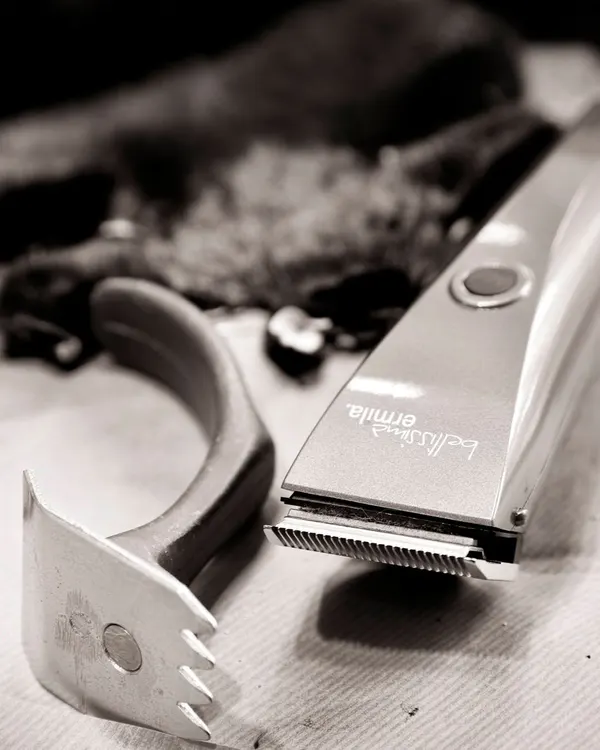
Clippers and a furrier's tool on the workbench, in black and white

What can be repaired, and what may no longer be

  • Can generally be repaired, if the leather allows it: an open seam or a tear in a sound pelt, worn areas (pockets, sleeves, hem, facings, underarms), the lining, buttons and fastenings, the cut (if the leather is properly supple).
  • May no longer be repairable for the long term: a pelt that clearly crackles or splits when folded, hair coming out in handfuls, leather attacked by damp.

Fur that sheds or thins

It is normal for the hair to thin over the years where it rubs: wrists, elbows, underarms, collar edge, lower back. Heavy shedding, which leaves tufts in your hand or shows the leather in places, is a different sign: it often goes with weakened leather. Some furs, such as rabbit, also shed more easily. What can be done with a thinned area depends on its cause, its extent, the condition of the leather and the type of fur: it is not always repairable, and only an examination of the garment can tell.

Repair, alteration or restyling?

  • A repair deals with localised damage or wear: seam, tear, worn area, lining, button, fastening, damaged pelt.
  • An alteration adapts the garment or the way it falls: length, sleeves, shoulders, waist, collar.
  • A restyling changes the cut, the construction or the use of the garment more deeply: a long coat becomes a jacket, a gilet, a reversible parka.

If your coat no longer feels like you, a restyling may be the right route.

The atelier

How does a repair work at New Embert?

Behind the boutique, the atelier: a cutting table, patterns, tools and a furrier's sewing machine. Each repair follows the same main steps there. Some are only needed for certain interventions.

  1. Examining the leather

    The leather first, by folding it, especially around the damage; then the hair, the worn areas, the seams, the lining and the smell of the inside.

  2. Advice and quote

    The atelier tells you what can be repaired, what can no longer be repaired for the long term, and what it recommends, including when it advises against a repair. The quote is drawn up after this examination.

  3. Access through the lining, where needed

    To reach the reverse side of the fur, the lining is opened when the repair requires it.

  4. Working from the reverse side

    The repair is carried out from the reverse side, on the leather side, at the cutting table and on the furrier's sewing machine: mending the seam or the tear, repairing a worn area locally, replacing a pelt when a compatible pelt or an acceptable solution has been found.

  5. Fitting, depending on the intervention

    A simple repair does not necessarily need one. For an alteration that changes the cut, the sleeves, the length, the ease or the fall, a fitting may be needed.

  6. Closing and final check

    When the lining had to be opened to allow the intervention, it is closed again afterwards. The repair is checked before the garment is returned to you.

  7. Collection or return

    You collect your coat from the atelier, or it is sent back to you as agreed.

How the price is set

The price depends on the repair, its extent, the condition of the leather and the length of the garment: a coat, a three-quarter coat and a jacket do not require the same work, for example for a lining. It is set by quotation, after the garment has been examined.

Belgium and abroad

Not based in Brussels?

The atelier works for clients across Belgium and abroad: Luxembourg, France, the Netherlands, Germany… A first exchange can take place entirely remotely. Photos of the damaged area, the inside of the garment and the label often allow a first opinion. The condition of the leather, however, can only really be judged at the atelier.

  1. Get in touch: by email, by phone or through the form.
  2. Photos and information: the garment from the front and the back, the damaged area close up, the inside opened to show the lining, the label, and what you would like repaired.
  3. First opinion and prior agreement: if the repair seems possible, we agree together on the next steps and how the garment will be sent.
  4. Sending the garment to the atelier, 35 chaussée de Charleroi, 1060 Brussels, once agreed.
  5. Examination at the atelier, confirmation of the diagnosis and the quote.
  6. Repair, then return of the garment as agreed.

Prevention

Avoiding the need for repairs

  • Store the coat away from radiators and damp: that is what dries out or attacks the leather.
  • Hang it on a wide hanger: a hanger that is too thin distorts and flattens the shoulders.
  • Protect it from light: it turns dark shades reddish and yellows light ones.
  • Beware of repeated rubbing, such as a bag strap or a belt: it wears the hair and the leather.
  • In summer, storage at the atelier keeps it cool.

Frequently asked questions

Can an old fur coat be repaired?

Yes, if its leather has stayed supple. Age matters less than the condition of the pelt: a well-kept old coat can be repaired, while a more recent coat with dried-out leather may no longer be.

How much does a fur coat repair cost?

The price depends on the repair, its extent, the condition of the leather and the length of the garment. It is set by quotation, after the garment has been examined.

Where can I have fur repaired in Brussels?

At the New Embert atelier, 35 chaussée de Charleroi in Saint-Gilles. If you live elsewhere in Belgium or abroad, the garment can be sent to the atelier after getting in touch and once the atelier has agreed.

Can torn fur be repaired?

Yes, when the leather around the tear is still sound enough: the repair is then carried out from the reverse side, opening the lining if necessary. If the leather is too dry or brittle, a lasting repair may be impossible, and the atelier will tell you so.

Why does a furrier sometimes turn down a repair?

Because on leather that is too fragile, new seams move the problem: the pelt tears right next to the repair. A good furrier would rather say so and suggest another solution.

Why is my fur coat shedding?

Where it rubs, the hair naturally thins over time. Heavy shedding, in tufts, often goes with weakened leather. What can be done with a thinned area depends on its cause, its extent, the leather and the type of fur: only an examination can tell.

Can a damaged pelt be replaced?

Yes, when the atelier has a compatible pelt or finds a technically and aesthetically acceptable solution. An identical pelt is not always available.

Can the lining of a fur coat be replaced?

Yes. The lining is replaced without touching the fur, for example with a pure silk or half-silk lining, provided the leather can still hold the seam.

Can a fur coat be shortened or altered?

Yes: shortening the hem or the sleeves, adjusting the shoulders, taking in the waist, altering the collar or the front overlap. These alterations require leather that has stayed properly supple, and sometimes a fitting.

Contact

Show us your coat

Visit the atelier at 35 chaussée de Charleroi in Saint-Gilles, or send us a few photos of the damaged area. We will tell you honestly what can be repaired.

Write to the atelier
Discover the atelier in the world of New Embert →