A new garment
The most complete transformation: the piece is fully taken apart, laid flat and recut to a current pattern. This is what produces a genuinely new garment: a shorter coat, a jacket, a new cut.
Atelier · Transformations
An inherited coat you hesitate to wear. A mink bought thirty years ago that has become too long, too wide, too safe. A fur worn at the cuffs, whose pelts are still beautiful. Since 1954, on the chaussée de Charleroi, the house of New Embert has been giving such garments a new life. Restyling them is now the main work of its atelier.
Transformations
Restyling a coat is not simply shortening it. Depending on what the material allows, the atelier offers several options, from the most complete to the lightest.
The most complete transformation: the piece is fully taken apart, laid flat and recut to a current pattern. This is what produces a genuinely new garment: a shorter coat, a jacket, a new cut.
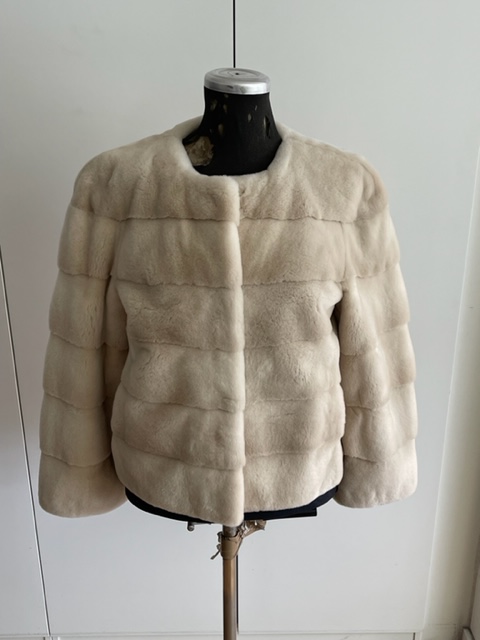
A long mink coat becomes a short jacket with a clean line: the grandmother's coat becomes the granddaughter's jacket. With the sleeves and part of the body removed, it becomes a sleeveless gilet, worn over a jumper or a dress, from day to evening.
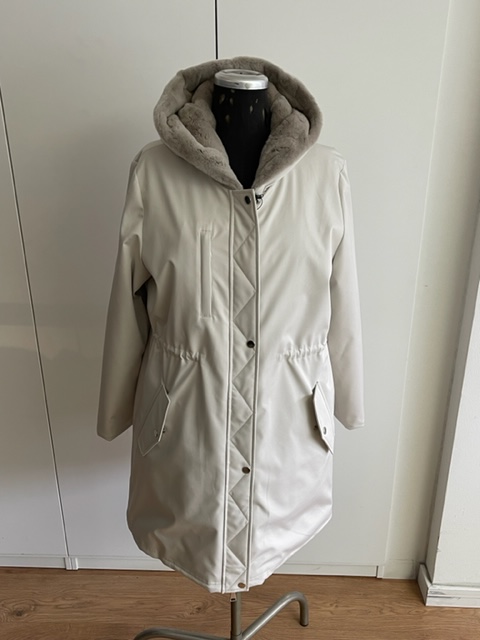
The fur moves to the inside of a garment that can be worn either way out. You keep the warmth without showing the fur: discreet outside, sumptuous when you turn back the collar.
Mounted as a removable lining, the fur warms a coat or a trench, and comes out when the weather turns mild.
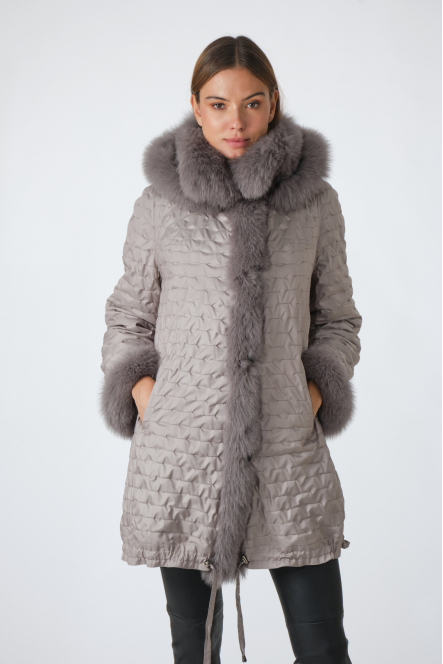
When the coat is worn in places, a shoulder piece (stole, bolero, cape) is cut from the areas that are still sound. The smallest pieces become a collar, cuffs or a border, set onto a wool coat or a jacket you already own.
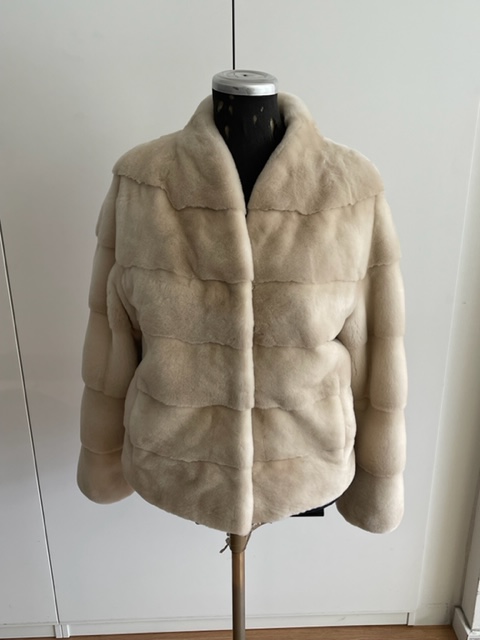
This is the most common situation. The piece often carries sentimental value, and a cut from another era. Restyling keeps the fur in a garment you will actually wear. Depending on the project, it is sometimes possible to keep a detail of the original coat.
If you like your coat as it is and it only needs to be put back in good condition, that is a repair.
“They are clients aged between 25 and 45 who don't want to wear their grandmother's old coat, but do want to recycle it.”
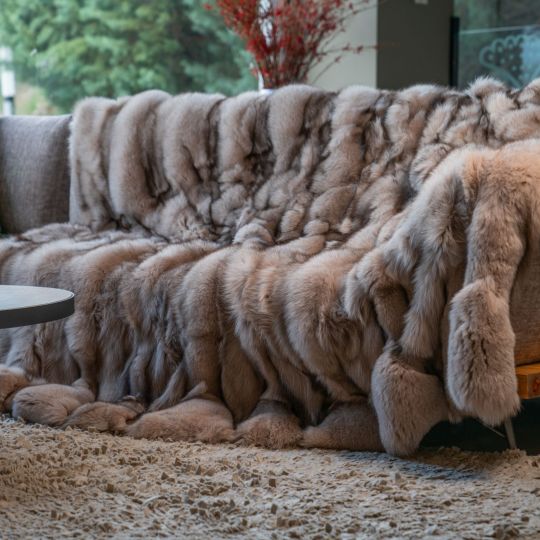
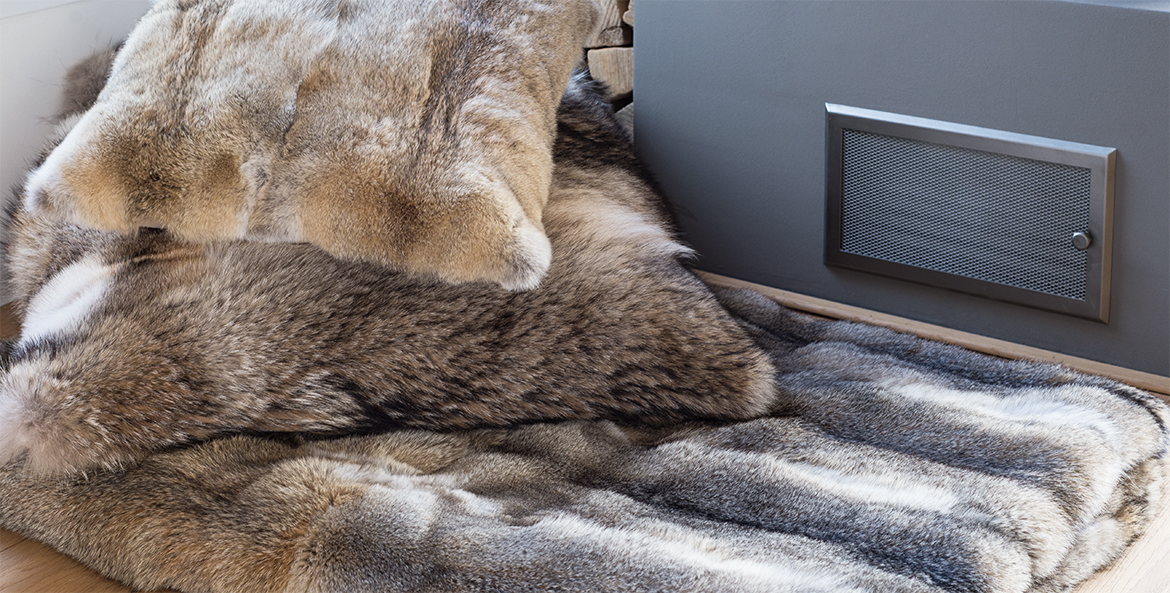
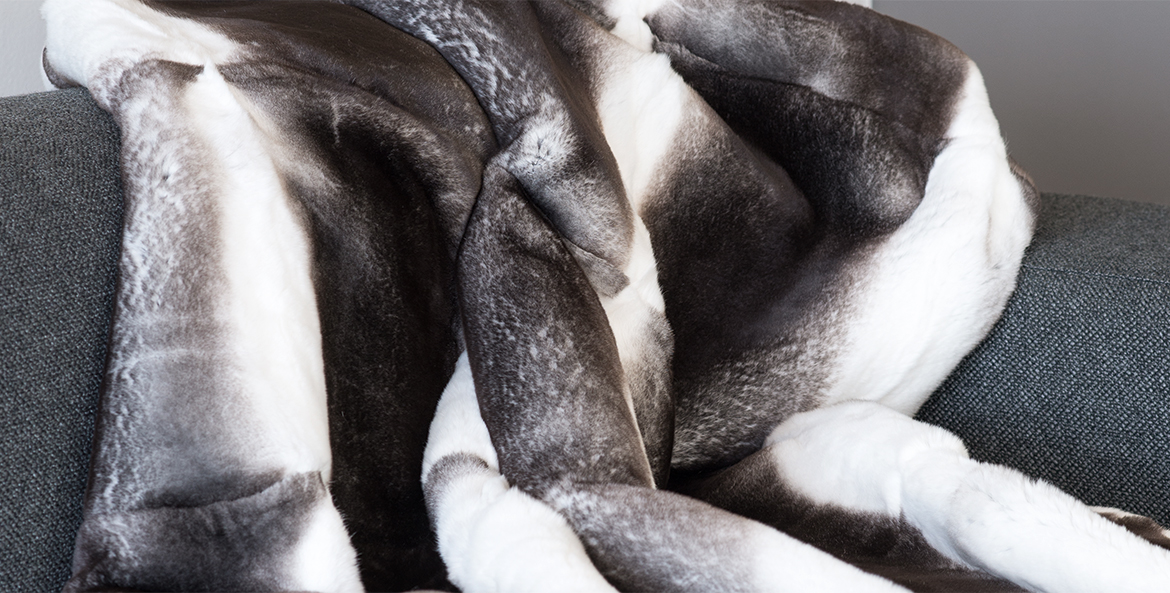
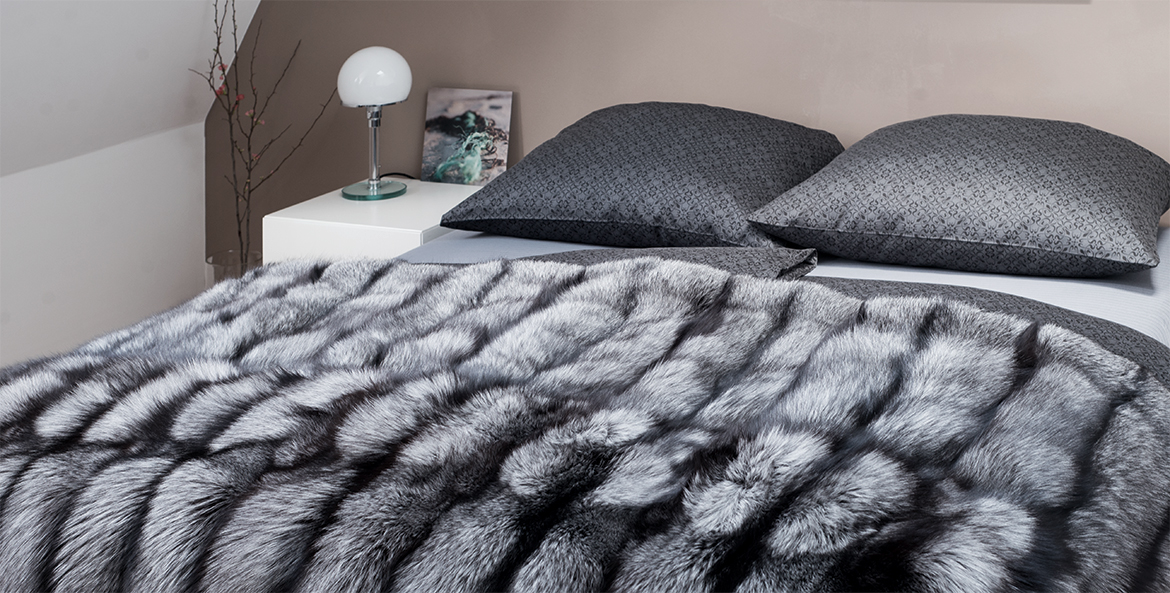
When the fur will not become a garment again, it can become a throw, a cushion or a bedspread. A cushion accepts almost anything, even leather that has already dried out.
The atelier
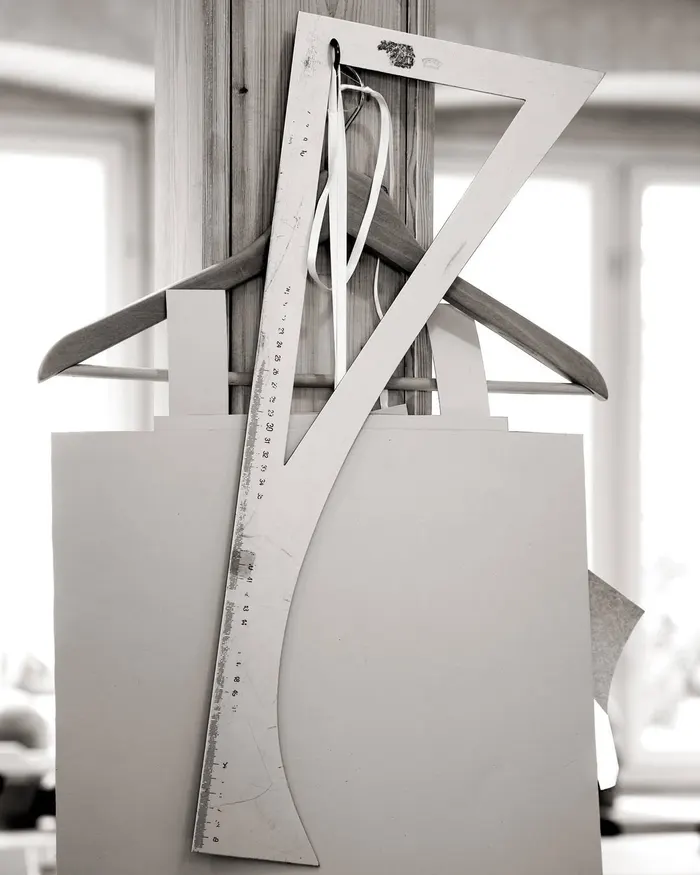
Behind the boutique, the atelier: a cutting table, wooden hangers, patterns yellowed by the years, and tools that have not changed in fifty years. Each restyling follows the same main steps, adapted to the project: some are only needed for certain garments.
Everything starts with the material. A section of fur is folded between the fingers to feel whether the leather has stayed supple: that is the criterion that decides everything. We look at the density of the hair, the areas that rub (elbows, cuffs, collar edge, lower back), the state of the seams and the lining. We also smell the inside of the garment: a musty odour signals damaged leather. The lining can always be replaced; it should never be a reason to give up on a project.
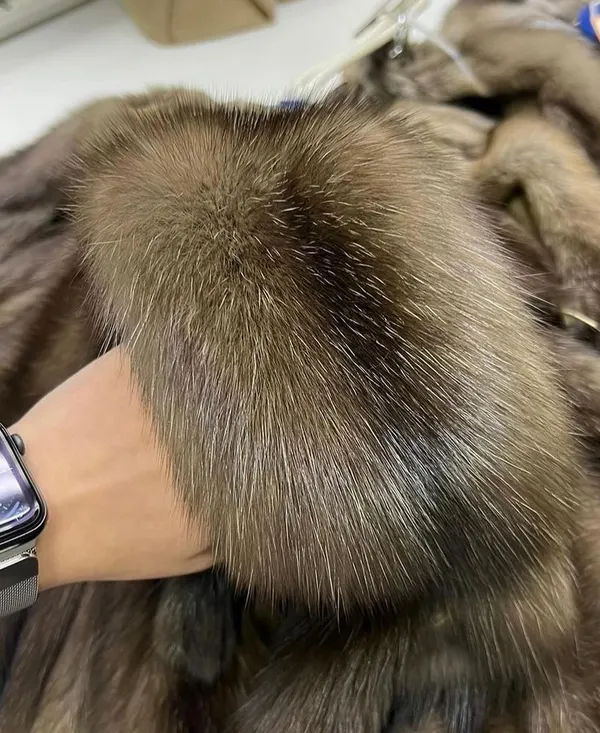
We suggest what the material allows: very supple leather permits a complete new cut, more tired leather points towards a gilet, a stole or trims. You choose the design, and the quote is drawn up after this examination.
When the restyling is made to measure, the measurements of the person who will wear the garment are taken to fit the new design.
The garment is taken apart and the pelts are laid flat. For a gilet, the sleeves and part of the body are removed.
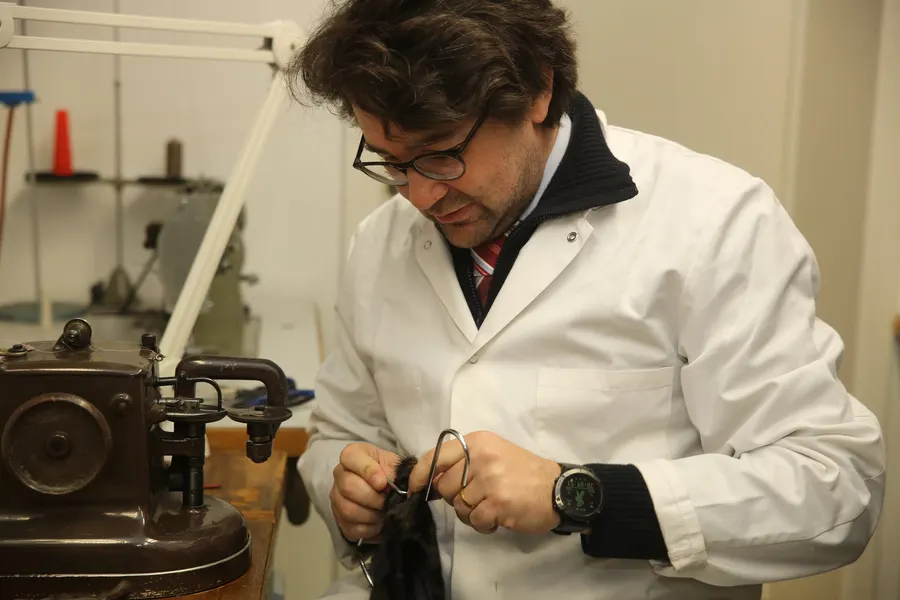
At the cutting table, the pelts are recut with the blade to a current pattern, then reassembled on the furrier's sewing machine. This is the knowledge Madame Fuchs-Lejeune passed on to Lionel: the way a mink pelt responds to the blade, the sense of a bias seam.
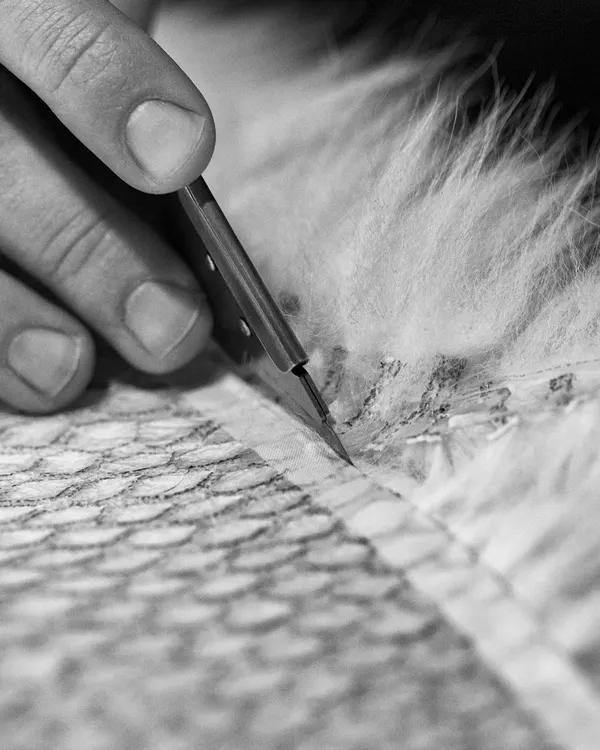
When the project calls for it, a fitting allows the garment to be adjusted before the finishing.
In a complete restyling, the lining can be replaced, for example with a pure silk or half-silk lining. This is not systematic: it depends on the garment and the project.
They are adapted to each project and may involve the collar, lapels, sleeves, pockets, front overlap, buttons or lining.
The material
Almost every fur, but not into just anything. The deciding factor is not the age of the coat but the condition of the leather. A pelt that has stayed supple can be recut. A dry pelt that cracks when folded can no longer take a new garment, but it can still become a cushion.
If a restyling is not sensible, we will tell you.
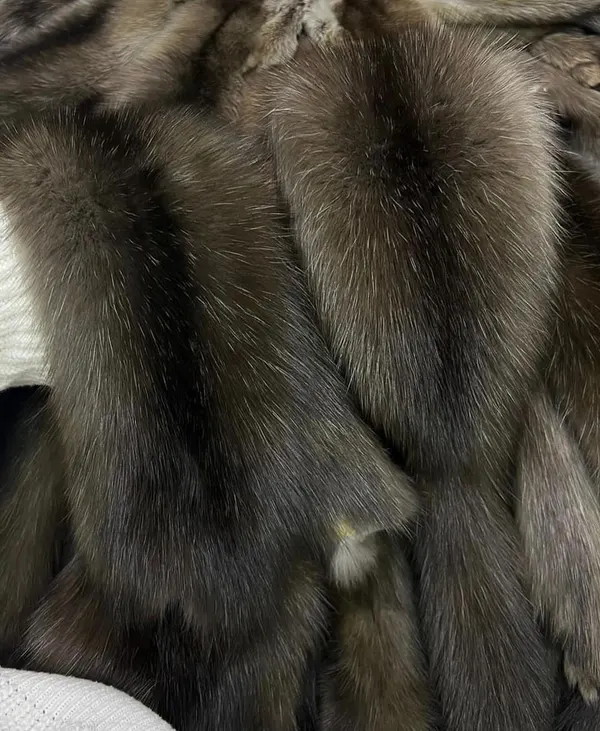
Every restyling is unique. Its price depends on the original piece, the amount of usable material, the condition of the leather, the chosen design and the cutting work. It is set by quotation, after the garment has been examined.
Our work
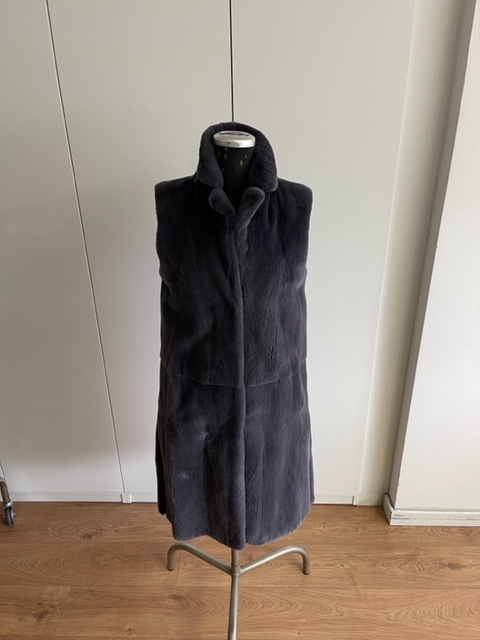
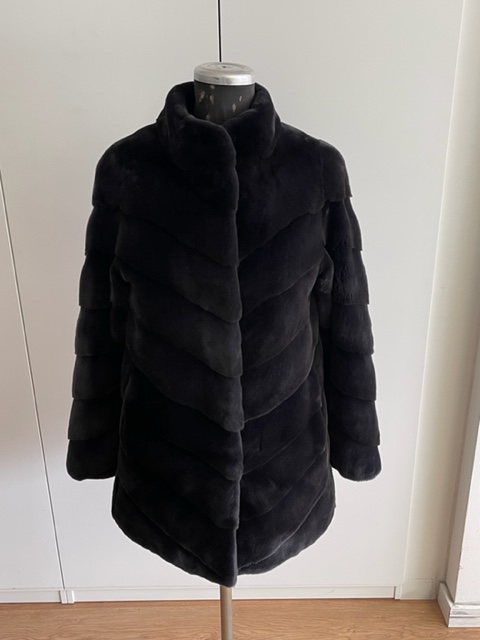
A slate-grey silhouette, long and open. To be worn over a jumper, over a dress, over oneself.
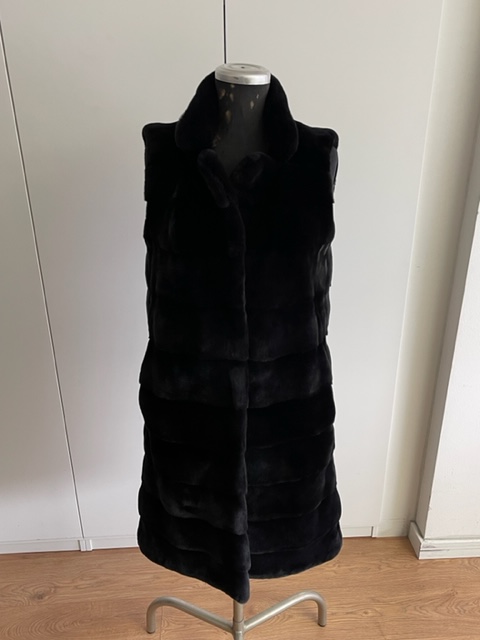
The verticality of black, the density of the fur. From day to evening with no need to change.
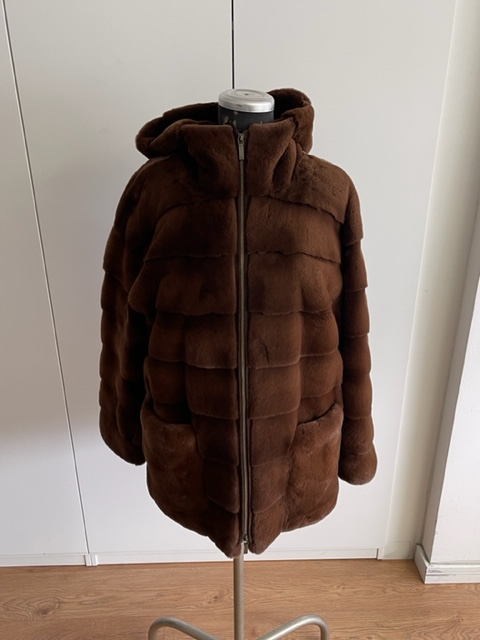
Fur becomes the everyday jacket. Hood raised, hands in the pockets.
A clean line, a gilded ivory tone. The grandmother's coat becomes the granddaughter's jacket.
No collar, no fanfare — a confident volume, worn with jeans as readily as with a dress.
Stand collar, long sleeves, three-quarter length. The piece that gathers up the whole of our craftsmanship.
The rain on one side, the fur on the other. A garment that adapts to the morning and to the mood.
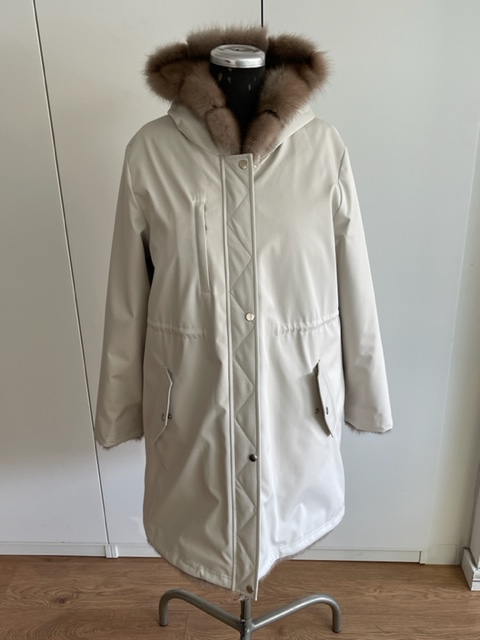
Russian sable on the inside. Discreet without, sumptuous the moment the collar is turned.
Belgium and abroad
The atelier works for clients across Belgium and abroad: Luxembourg, France, the Netherlands, Germany… A first exchange can take place entirely remotely. Photos often allow a first opinion on what your coat could become; the examination at the atelier then confirms the project and the quote.
Have it restyled into a garment you will wear (jacket, gilet, reversible parka), turned into something for the home, or have it valued. If it stays in the wardrobe, it at least deserves proper storage.
Yes, it is the most frequent request at the atelier. It all depends on the condition of the leather: if it has stayed supple, the coat can become an entirely different garment.
Yes. Mink is one of the furs best suited to a new cut, provided the leather has kept its suppleness.
Yes. That is the route for coats that will not become garments again. A cushion accepts almost anything, even leather that has already dried out.
The price depends on the piece, the usable material, the condition of the leather and the chosen design. It is set by quotation, after the garment has been examined.
No. The first exchange can take place remotely; the garment can then be sent to the atelier after getting in touch.
Contact
Visit the atelier at 35 chaussée de Charleroi in Saint-Gilles, or send us a few photos. We will tell you what your coat could become.
Write to the atelier